The core idea
Traditional vocabulary study uses word lists: you see a word, its translation, and maybe an example sentence. Sentence mining inverts this. Instead of starting from a list, you start from real content you're already consuming — a TV show, a YouTube video, a novel — and extract the sentences that contain words you don't know yet.
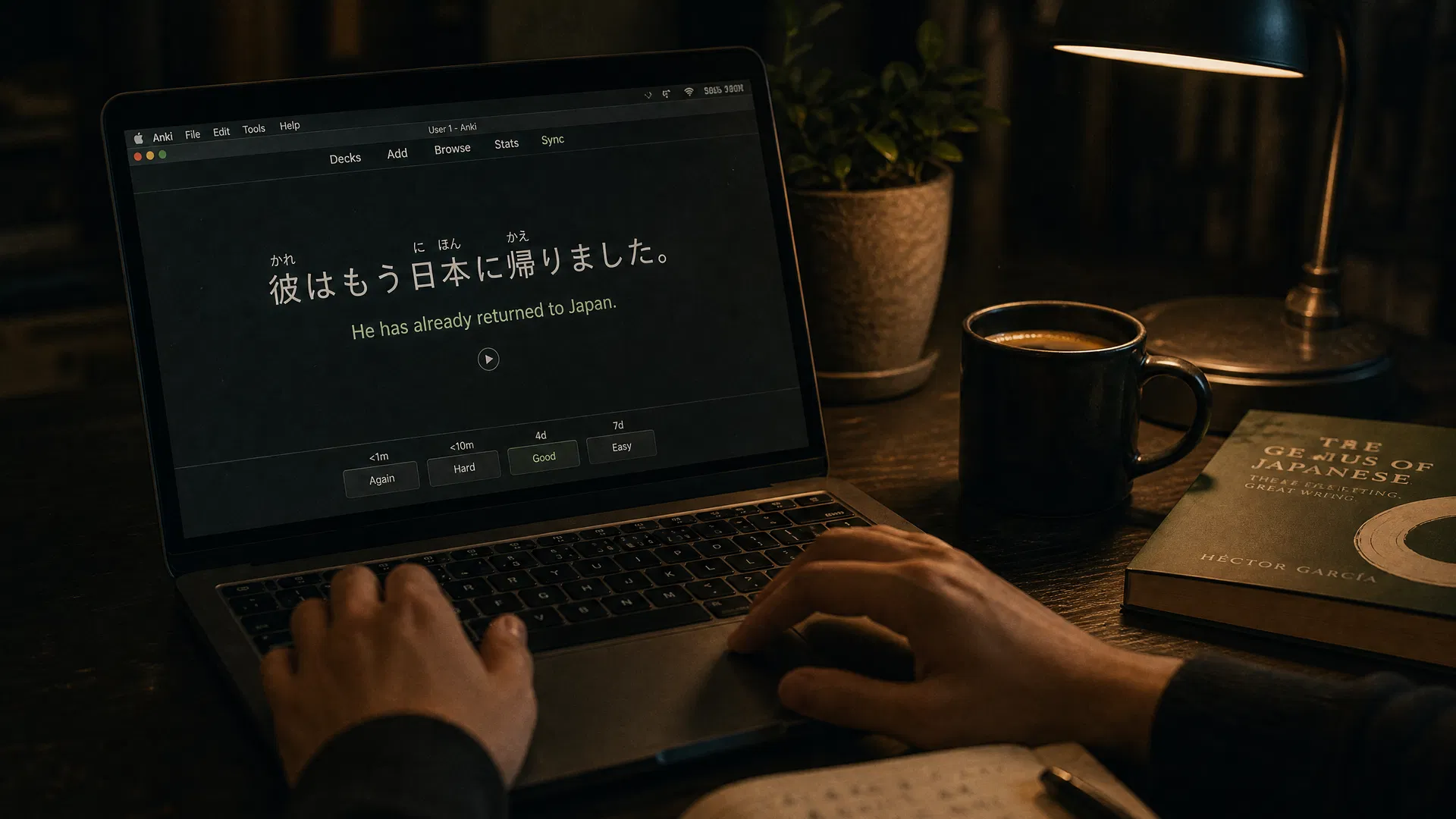
Those sentences become Anki flashcards. When you review a card, you see the sentence with the target word hidden, try to recall it, then flip the card to check. Anki's spaced repetition algorithm schedules each card for review at the optimal moment — just before you'd forget it.
The streaming sentence mining workflow
Watch with target-language subtitles
Use a subtitle extension like LangPanda on Netflix, YouTube, or Disney+. The extension displays dual subtitles and lets you click any word for an instant dictionary pop-up — without pausing or leaving the video.
Apply the 1T rule
Only mine sentences with exactly one unknown element. If a sentence has two unknown words, skip it or look up one first. This keeps your Anki cards reviewable and prevents confusion during review.
Export to Anki in one click
LangPanda's 1-click Anki export creates a card with the full sentence, the audio clip from the video, a screenshot of the scene, and the dictionary definition. No manual card creation required.
Review daily
Spend 15–20 minutes each day reviewing your Anki deck. Anki's algorithm handles the scheduling — you just answer honestly (Again / Hard / Good / Easy) and the system optimizes your retention automatically.
Automate the entire workflow with LangPanda
Pop-up dictionary + 1-click Anki export on Netflix, YouTube, Disney+, and 7 more platforms. Free 7-day trial.
ⓘ Disclosure: BingeFluent earns a commission from links to our partners: LangPanda, Trancy, Lingopie, italki, and LingQ at no extra cost to you. We only recommend tools we believe in.
Try LangPanda FreeCommon mistakes to avoid
✗ Mining too many cards per day
Fix: Cap at 10–20 new cards/day. Review burden compounds fast — 30 new cards/day creates 150–200 daily reviews within a month.
✗ Ignoring the 1T rule
Fix: Cards with multiple unknowns are inefficient. Skip sentences with more than one unknown word until you've learned one of them.
✗ Mining without enough immersion
Fix: Sentence mining amplifies immersion — it doesn't replace it. Aim for at least 30–60 minutes of immersion per day alongside your Anki reviews.
✗ Suspending cards instead of deleting bad ones
Fix: If a sentence feels unnatural or you can't remember the context, delete the card and mine a better example. Quality over quantity.