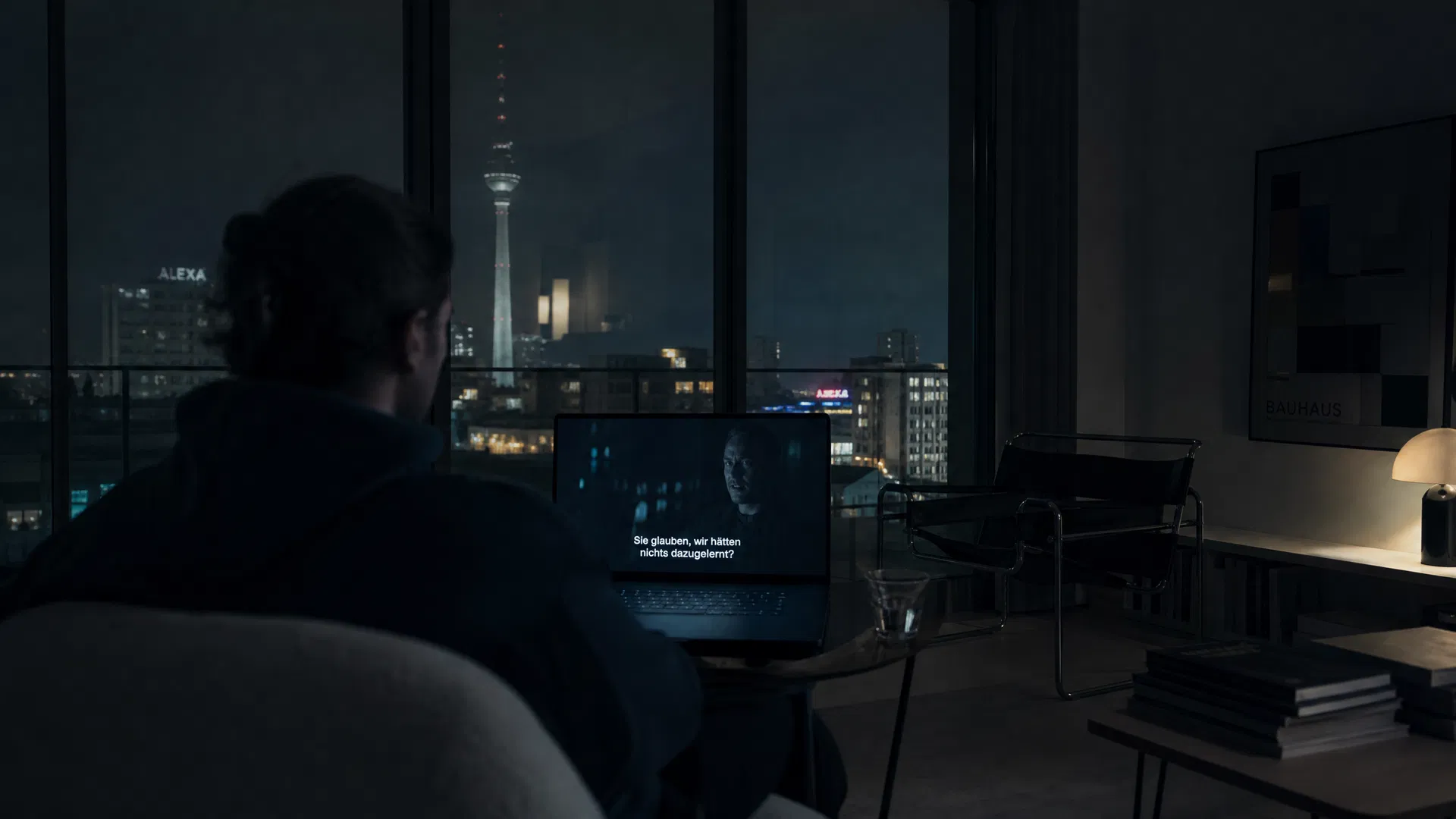
Learn German with Dark
Dark is Germany's most celebrated Netflix original — and one of the most effective shows for building advanced German vocabulary. The deliberate pacing and rich dialogue make it perfect for immersion learners at the intermediate level and above.
Why Dark Works for German Learners
Most German shows are either too fast (crime procedurals) or too colloquial (sitcoms) for effective immersion learning. Dark occupies a rare sweet spot: the actors speak slowly and clearly, the vocabulary is rich but not impenetrable, and the three time periods expose you to slightly different registers of German — from 1950s formal speech to contemporary informal dialogue. It's the closest thing to a structured vocabulary course disguised as a thriller.
Most Frequent Key Words in Dark
Estimated appearances across all 3 seasons — words worth adding to your Anki deck first.
Season-by-Season Learning Guide
Learner tip: Best starting point. Dialogue is clearest here. Focus on family and town vocabulary.
Learner tip: Vocabulary density increases. More philosophical monologues — excellent for advanced learners.
Learner tip: Most complex vocabulary. Ideal for C1 learners. Many new characters with distinct speech patterns.
Key German Vocabulary from Dark
- 1.Install LangPanda as a Chrome or Firefox extension
- 2.Open Dark on Netflix (available in German with German subtitles)
- 3.Enable dual subtitles: German on top, English below
- 4.Click any compound word or unfamiliar term for instant lookup + Anki export
- 5.Focus on the thematic vocabulary — time, fate, and guilt words appear repeatedly
- 6.Aim for 10–15 new cards per episode; compound nouns are especially worth saving
Dark's three time periods expose you to different registers of German. The 1953 scenes use more formal, old-fashioned vocabulary — great for reading comprehension. The 1986 scenes are the most "textbook" German. The 2019 scenes are the most colloquial and closest to modern spoken German. If you're a B1 learner, start with the 1986 scenes. If you're B2+, the 2019 scenes will challenge you most productively.
Complement your watching with German speaking practice
Immersion builds comprehension — italki tutors build your speaking. Book a 1-on-1 German lesson with a native speaker from around $4–5 per lesson.
ⓘ Disclosure: BingeFluent earns a commission from links to our partners: LangPanda, Trancy, Lingopie, italki, and LingQ at no extra cost to you. We only recommend tools we believe in.
Find a Tutor on italki